Health and Safety Policy for House Clearance Beaconsfield
Purpose and scope: This policy sets out the commitment of our house clearance and rubbish removal service to protect the health, safety and welfare of employees, contractors and members of the public who may be affected by our operations. It applies to all routine and non-routine house clearance activities, including domestic clearance, bulky waste uplift, hazardous item handling and site-based sorting for recycling. The aim is to ensure compliance with applicable workplace health and environmental obligations while supporting safe, efficient rubbish collection and clearance across our service area.
 Roles and responsibilities are clearly defined. Senior management has overall responsibility for policy implementation and periodic review, while site supervisors and crew leaders are responsible for day-to-day enforcement of safe systems and for ensuring staff are competent. Employees are required to follow safe working procedures and to report hazards and incidents promptly. Contractors engaged to assist with clearance work must meet our safety standards and provide satisfactory evidence of competence.
Risk assessment and control measures
Risk assessments will be carried out for each clearance activity and location, with documented controls proportionate to the identified hazards. Key controls include:
- Personal protective equipment (PPE): mandatory use of appropriate gloves, eye protection, high-visibility clothing and respiratory protection where dust or airborne particles are present.
- Manual handling and lifting: mechanical aids, team lifting, and safe lifting techniques to reduce musculoskeletal injuries.
- Hazardous materials management: segregation, containment and transfer of potentially dangerous items—chemicals, batteries, asbestos-containing materials—only by trained personnel.
- Vehicle and traffic safety: secure load restraint, daily vehicle checks and safe vehicle access/egress procedures.
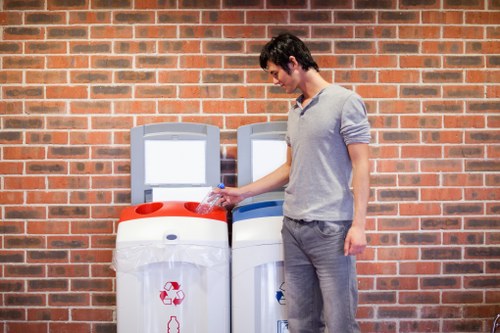
- Waste segregation and recycling: separation of recyclables and non-recyclables at point of collection to reduce landfill disposal and enhance environmental safety.

Identifying and managing specific hazards
Clearance operations present a range of hazards: sharp objects, broken glass, needles, biological waste, chemical residues, electrical items, pest infestations and potential asbestos. Each potential hazard is treated seriously and controlled by a combination of engineering, procedural and behavioral measures. Sharps are segregated into approved containers; suspected asbestos is isolated and reported to appropriate specialists; chemical containers are assessed for stability and safely removed by qualified handlers. Electrical items are checked and disposed of according to waste electrical and electronic equipment procedures.
Before work begins a site-specific briefing is provided: duties, evacuation routes, welfare arrangements and emergency contacts. Work areas are secured to prevent unauthorised access and slip/trip hazards are minimised by housekeeping and suitable signage. Where elevated or confined space tasks are required, additional permits and specialist controls will be implemented.
Training, competence and supervision
All staff receive induction training on this policy, and role-specific training on manual handling, PPE use, hazardous waste recognition and vehicle safety. Competence is assessed periodically and refresher training is provided as required. Supervision is provided during complex clearances or when inexperienced staff are present. Contractors working under our control must provide evidence of training and insurances before starting work.
Inspection and maintenance of equipment—lifting aids, compactors, trolleys and PPE—are scheduled and recorded. Vehicles used for removal and waste transport undergo regular servicing and safety checks. Fuel and chemical storage for mobile equipment is managed to minimise fire and environmental risk.

Emergency procedures, incident reporting and first aid
Emergency procedures are in place for fire, major spill, personal injury and vehicle incidents. Staff receive instruction on immediate first-aid measures and how to summon emergency services. Incidents, near misses and hazardous observations must be reported using the organisation's reporting system so that corrective actions and preventive measures can be implemented swiftly. Records are maintained to support continuous improvement and legal compliance.
Monitoring and review: This policy is reviewed annually or following a significant incident, change in legislation, or a change in the nature of our house clearance and rubbish collection operations. Audits and safety inspections are carried out to ensure controls remain effective. Management will ensure the necessary resources are available to implement and maintain this policy and to promote a culture of safety across the clearance company.
Final statement: Our commitment is to conduct all house clearance and rubbish removal activities with due regard for safety, health and the environment. Everyone involved in our operations—staff, subcontractors and visitors—has a part to play in maintaining a safe working environment. Compliance with this policy is mandatory and contributes to safe, reliable clearance services across the areas we serve.
